How Far Has Image Generation Come? What Florists Should Know
From 256-pixel blurs to 4K photorealism in five years. Where generic tools still fail florists, and why your expertise is the missing piece.
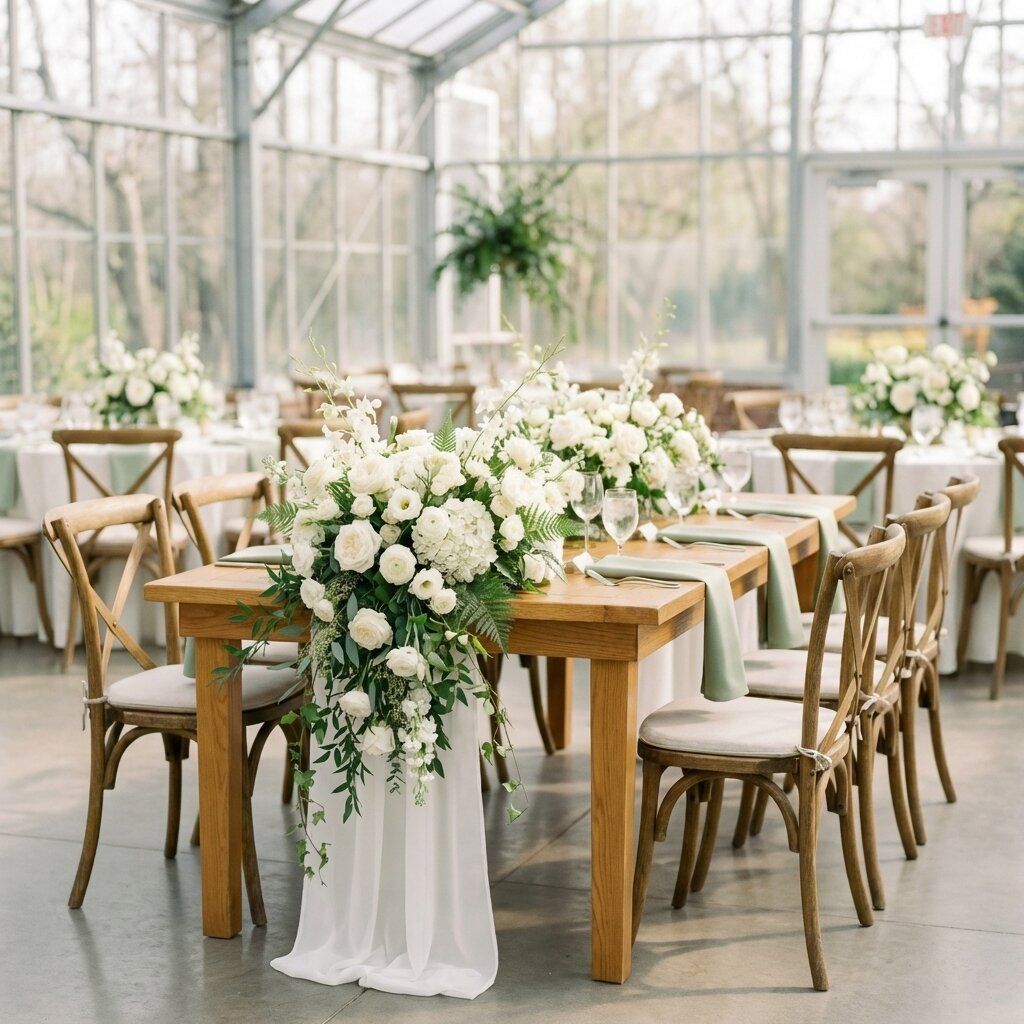
You're on a consultation call. The client describes "romantic, garden-style, dusty rose and mauve with lots of movement." You nod. You can see the arrangement in your head. The garden roses, the trailing amaranthus, the soft greenery filling in the gaps.
But the client? They're picturing something completely different. Maybe they're imagining tight, round centerpieces. Maybe they saw a $15,000 installation on Pinterest and think that's what $3,000 buys. You won't know until you can show them something visual, and by then, you've already spent hours on a proposal that might need a full rework.
This visual gap between what's in your head and what's in theirs isn't new. It's been the central frustration of floral design for decades. What is new is how far image generation technology has come in just five years. And whether you've been paying attention to it or not, it's starting to change how florists communicate with clients.
TL;DR: Image generation went from producing blurry 256-pixel squares in 2021 to photorealistic 4K output in 2026. But for florists, raw quality isn't enough. Generic tools still generate made-up flower varieties and impossible arrangements. The tools that actually work combine your floral expertise with accurate rendering of real varieties you can source and build.
What Did Image Generation Look Like Five Years Ago?
In January 2021, the best text-to-image model produced 256x256 pixel images. That's smaller than your phone's thumbnail (Gold Penguin, 2024). Ask it for a bridal bouquet and you'd get a pink-ish smudge that vaguely resembled flowers if you squinted.

By 2022, resolution jumped to 1024x1024. That was impressive for the technology world, but flowers still looked wrong. Roses had seven petals or seventeen. Stems melted into each other. Color gradients appeared that don't exist in nature. If you're a florist and you looked at these images, you'd have been right to laugh them off.
The volume was massive even then. By mid-2023, an estimated 34 million images were being generated per day across all platforms (Everypixel Journal, 2024). But volume doesn't mean quality. Most of those images wouldn't fool anyone who actually works with flowers.
Here's the thing, though. The pace of improvement wasn't slowing down. It was accelerating.
When Did the Quality Actually Get Good?
Somewhere between late 2023 and mid-2024, something shifted. A peer-reviewed study published in Cognitive Research: Principles and Implications found that nearly 40% of participants couldn't tell generated images apart from real photographs (Springer, 2025). For human faces specifically, that number jumped to 80%. The generated images were more convincing than the real ones.

For floral design, this was the inflection point. Specific flower varieties became recognizable. A ranunculus actually looked like a ranunculus, not a cabbage. Garden roses had the right petal density and that slightly cupped bloom shape. You could start to see the difference between a David Austin and a standard hybrid tea.
Then came March 2025. A single platform launched native image generation, and 130 million users created over 700 million images in one week (TechCrunch, 2025). That wasn't a tech demo anymore. That was mainstream adoption, practically overnight.
By 2026, 4K output has become standard. Text rendering hit 99% accuracy. The technology crossed from "interesting novelty" to "genuinely capable tool" (North Penn Now, 2026). So does that mean it's ready for your next client proposal? Not quite. Not yet. Not without some important caveats.
Where Generic Tools Still Fall Short for Florists
Here's the part that most articles about image generation skip over. Yes, 83% of creative professionals now use generative tools in their work (Adobe via Photoroom, 2024). But a tool built for everyone isn't built for florists. The gaps show up fast, and they're exactly the kind of gaps that would damage your credibility with a client.
Botanical accuracy. Generic tools generate "a rose." Not a Juliet garden rose vs. a standard hybrid tea. Not the specific petal count, bloom shape, and growth habit that make each variety distinct. You'd spot the difference immediately. So would any client who's done their homework on Pinterest.
Arrangement mechanics. Some generated arrangements straight-up defy physics. Stems going in impossible directions. Top-heavy designs that couldn't hold in a vase. Compositions that look pretty in a flat image but would collapse the second you tried to build them.
Scale and proportion. A dahlia dinner plate and a spray rose shouldn't render the same size. But generic tools don't understand relative flower sizing. They'll give you a ranunculus the size of a hydrangea head without blinking.
Seasonal blindness. The tool doesn't know peonies aren't available in November. It doesn't know your wholesaler's inventory. It doesn't know what's in season in your region right now. Show a client a mockup full of out-of-season blooms and you've set an expectation you can't deliver on.
The expectation trap. This is the big one. If the mockup contains a flower that doesn't exist as a real variety, you've just promised something you can't source on event day. A photorealistic image of a fantasy flower is worse than no image at all, because the client will expect exactly that.
What's the point of a stunning image if it shows flowers you can't actually source? That disconnect is why most florists who've tried generic tools walked away unimpressed. It wasn't the technology that failed. It was the application.
Why the Florist's Input Is What Makes This Work
Here's what I've learned building FloraViz: the technology is only half the equation. The other half is you.
55% of small businesses now use image generation tools, up from 39% just a year earlier (Thryv, 2025). But adoption alone doesn't mean the tools are useful for every profession. What matters is how the tool uses your expertise.
Generic tools take a vague prompt and guess. A florist-specific tool takes your specific vision and makes it visible. That difference matters more than any resolution upgrade. (Want to see it in action? Here's our two-minute mockup challenge.)
Your expertise drives the input. You describe the actual varieties you plan to use, so fantasy flowers never enter the picture. You describe the arrangement style and structure, so the design reflects something you'd actually build. Your knowledge of seasonality, your wholesaler's inventory, what works mechanically in a vase or on an arch or down a table runner: that's all baked into what you tell the tool.
The tool's guardrails validate the output. Even beyond what you describe, FloraViz ensures real varieties are rendered accurately. Correct petal structure. True-to-life color. Proper form. It's a safety net on top of your expertise, not a replacement for it.

The result? A mockup you can actually build on event day. Not a fantasy image. A visual communication tool between you and your client.
When my wife and I planned our wedding, we hit exactly this wall. We knew what we wanted but couldn't picture what our florist already had in her head. We didn't need a pretty picture of imaginary flowers. We needed to see what she already knew. That gap is what FloraViz is built to close. Your knowledge plus accurate rendering equals a mockup worth showing.
What Does This Mean for Your Workflow?
Some florists spend up to 5 hours on a single proposal, and most of that time goes toward trying to show the client what the finished arrangement will look like (Team Flower). Manual digital mockups in Canva or Photoshop easily take 1-2 hours once you factor in sourcing reference photos, cutting out individual stems, and compositing everything together. In an industry where the top 50 companies control less than 10% of total revenue (First Research), most florists are small operations where that time comes straight out of margin.
| Method | Time Per Mockup | |--------|----------------| | Full proposal with physical samples | Up to 5 hours | | Manual digital mockup (Canva / Photoshop) | 1-2 hours | | FloraViz | Under 2 minutes |
Meanwhile, the rest of the wedding industry isn't waiting. 91% of event planners already use image generation tools in some capacity (PCMA, 2024). One in five engaged couples now uses at least one such tool during planning, and that number doubled in two years (Digital Commerce 360, 2025). In the UK, 42% of currently engaged couples report using these tools (Queensmith, 2025).
Planners are going to start expecting visual previews from their vendors. Couples already are. The florists who build this into their workflow now aren't replacing their expertise. They're making it visible.
For a deeper look at every visualization method available to florists today, see our complete comparison of client presentation methods.
What's Next?
The quality curve isn't slowing down. Worldwide spending on generative technology is projected to hit $644 billion in 2025, a 76% increase from 2024 (Gartner, 2025). That investment will keep pushing resolution, accuracy, and speed forward.
But for florists, the technology was never really the bottleneck. The application was. A photorealistic image of a made-up flower is worthless. A photorealistic image of the exact arrangement you plan to build, using the exact varieties you'll source, matching the actual proportions you'd design? That changes how clients experience your work.
FloraViz is built on this idea: your knowledge plus accurate rendering equals a mockup worth showing. You bring the expertise. You describe real varieties, real structure, real design. The tool makes sure what comes back looks true to life and true to what you can actually deliver.
As the underlying technology continues improving, the tools built specifically for florists will only get more useful. The question isn't whether image generation is "good enough" anymore. It clearly is. The question is whether the tool you're using understands flowers the way you do. (Curious what sharing a mockup with a client actually looks like? See how florists share mockups with clients.)
Ready to see what your arrangements look like before you build them?
Frequently Asked Questions
How accurate are generated floral images compared to real photos?
A 2025 peer-reviewed study found that nearly 40% of participants couldn't distinguish generated images from real photographs (Springer). However, accuracy varies wildly depending on the tool. Generic image generators often produce flowers with incorrect petal counts or impossible anatomy. Tools built specifically for floral design, like FloraViz, validate against real varieties to ensure botanical accuracy.
Can image generation replace physical flower mockups?
For most client presentations, yes. Physical mockups require sourcing, processing, and arranging real flowers that can't be reused for other clients. Some florists spend up to 5 hours per proposal (Team Flower). A tool like FloraViz generates a photorealistic preview in under two minutes. It won't replace your hands on event day, but it replaces the time-consuming preview step.
Do clients trust generated mockup images?
Research shows nearly 40% of people can't tell generated images from real photographs (Springer, 2025). But clients care less about whether the image is "real" and more about whether it represents what they'll actually get. When the mockup shows varieties you can source and an arrangement you can build, clients respond with confidence. The key is that what you show matches what you deliver.
How is FloraViz different from using a generic image generator?
Two things set it apart. First, you drive the input: you describe the specific varieties, arrangement style, and design structure based on your expertise, so made-up flowers and impossible physics are avoided from the start. Second, FloraViz validates the output against real flower varieties to ensure accurate petal structure, true-to-life color, and proper form. It's a collaboration between your floral knowledge and the tool's rendering. See how it works in our 90-second mockup walkthrough.
FloraViz generates photorealistic previews based on your floral design descriptions. Results are visual mockups intended to communicate your design vision to clients. Final arrangements are crafted by you, the designer.

Dan Sandoval
Founder of FloraViz. After seeing the effort behind his own wedding flowers, he built a tool to save florists hours on mockups and bring total confidence to every proposal.
March 11, 2026